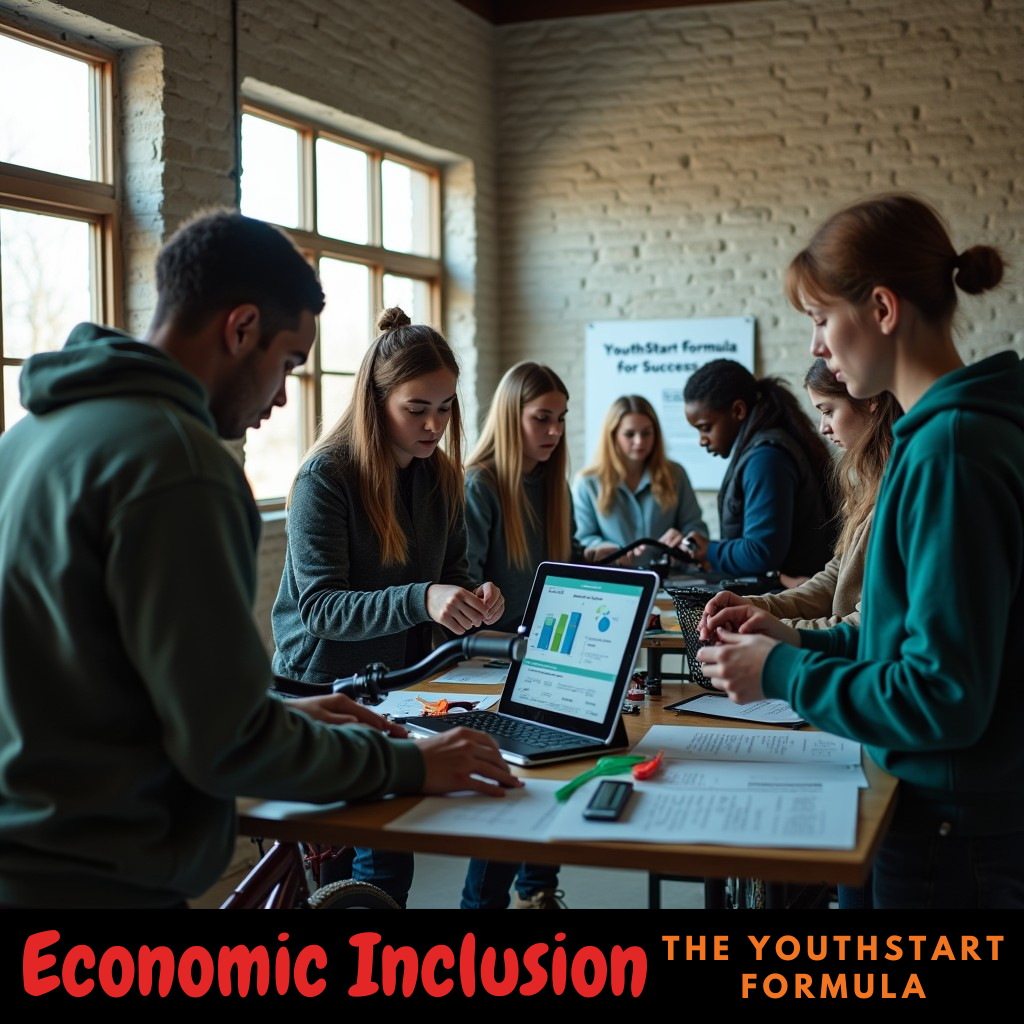

As Northern Ireland transitions from European Social Fund (ESF) to the next phase of the UK Shared Prosperity Fund (UKSPF), there is a critical opportunity to apply three decades of evidence to shape more effective youth economic inclusion initiatives. The ESF has funded employment-related support for over 30 years, benefiting more than 77,000 individuals in Northern Ireland. This substantial experience offers valuable insights that should inform future UKSPF investments.
Multiple evaluations have identified consistent elements of
success in ESF-funded youth employability programmes:
Independent Evaluation Findings
The Education and Training Inspectorate (ETI) rated 97% of
ESF projects as good or better and 45% as outstanding in their 2016-2018 Chief
Inspector’s Report. They specifically highlighted:
- Wraparound,
holistic support for participants with complex needs
- Personalised
approaches tailored to individual circumstances
- Strong
staff-participant relationships as fundamental to success
- Effective
integration of personal development and employability skills
Grant Thornton’s impact evaluation of the 2014-2020 ESF
Programme found that youth employability projects delivered at a unit cost of
£2,091 per participant (well below the projected £3,500) and that success
stemmed not just from skills development but from increased confidence.
The YouthStart pilot under the UK Community Renewal Fund
demonstrated the effectiveness of the youth work approach, exceeding all
targets for qualification attainment and progression with a 64% overall
progression rate into either employment or education/training.
Six Key Success Factors
1. Youth Work Methodology
The youth work approach has proven particularly effective in
engaging young people furthest from the labour market through:
- Relationship-based
engagement built on trust and voluntary participation
- Young
person-centred support shaped around individual aspirations
- Informal
learning environments that contrast with negative educational experiences
- Asset-based
approaches that build on strengths rather than focusing on deficits
As one YouthStart participant noted: “It felt like an
open space to ask questions because you didn’t feel that stiffness of a
classroom environment.”
2. Holistic, Wraparound Support
Successful programmes address multiple barriers
simultaneously:
- Integrating
specialist support for specific challenges (mental health, housing, etc.)
- Combining
personal development with employability skills
- Providing
practical support (transport, childcare, appropriate clothing)
- Continuing
support after job entry to ensure sustainable outcomes
This approach recognises that employment barriers are rarely
isolated and often interconnected.
3. Employer Engagement
Effective programmes build bridges between young people and
employers:
- Educating
employers about the barriers faced by young people
- Acting
as trusted intermediaries during job matching and early employment
- Providing
low-risk work experience opportunities
- Supporting
both young people and employers after placement
4. Personalisation and Flexibility
The ability to adapt to individual needs has been identified
as crucial:
- Tailored
progression pathways based on starting points and aspirations
- Flexible
duration allowing support to continue as needed
- Individualised
pacing that recognises different rates of progress
- Content
adapted to personal interests and learning styles
One youth worker explained: “We need to work at the
pace of the young person. Youth workers recognise that there will be relapses
on the young person’s journey, but they help the young person to keep going,
build resilience and consistently believe in their potential.”
5. Partnership Approaches
Collaborative models enhance effectiveness:
- Multi-agency
collaboration to address complex needs
- Formal
partnerships between organisations with complementary expertise
- Community
embeddedness and local knowledge
- Shared
learning and resource efficiency
The YouthStart partnership of seven youth work organisations
demonstrates how this approach enables “sharing of resources, workforce
development via sharing of specialisms and represents value-for-money.”
6. ‘Distance Travelled’ Measurement
Recognising progress beyond traditional employment outcomes:
- Valuing
improvements in confidence, wellbeing, and life skills
- Breaking
journeys into manageable steps with recognition for each achievement
- Using
qualitative evidence to capture rich stories of change
- Tracking
long-term outcomes to understand sustainable impact
Learning from Limitations
ESF evaluations have also identified approaches that proved
less effective:
1. Rigid Outcome Definitions
Narrow outcome measures often failed to capture progress
made by those furthest from the labour market, creating incentives to work with
easier-to-help participants rather than those with complex needs.
2. Administrative Burden
Excessive paperwork diverted resources from frontline
delivery, with complex application processes creating barriers for smaller
organisations and disproportionate evidence requirements consuming staff time.
3. Competitive Funding Models
Competition between providers undermined collaboration and
knowledge sharing, while short-term funding cycles discouraged long-term
investment in staff development and innovative approaches.
4. Disconnect from Wider Systems
Isolation from mainstream education, health, and employment
systems limited progression opportunities and created unnecessary transitions
between services.
The YouthStart Model: Blueprint for Success
The YouthStart partnership offers a practical model
incorporating key success factors:
- A
consortium approach bringing together complementary expertise
- Integrated
focus on life, learning, and work skills
- Youth-led
design principles
- Personalised
support tailored to individual circumstances
- Clear
framework with flexibility for adaptation
This model has demonstrated impressive results while
maintaining strong value for money, offering a blueprint for future UKSPF
investment.
Looking to the Future: Recommendations for UKSPF
As the UK Shared Prosperity Fund (UKSPF) develops its
strategy for supporting economic inclusion in Northern Ireland, YouthStart
advocates for four key recommendations based on its evidence of impact:
- Broad
definition of economic inactivity – UKSPF should adopt an inclusive
definition that encompasses those not in education, training, or
employment, enabling more comprehensive support programmes.
- Recognition
of youth work as a key fourth strand—Youth work organisations should
be formally recognised as a complementary strand alongside schools,
colleges, and training organisations, particularly effective for the
hardest-to-reach young people.
- Defined
relationships with Labour Market Partnerships – Clearer frameworks
would enable youth work organisations to support councils in improving
economic activity rates in their areas.
- Regional
and local delivery capacity—Maintaining the ability to work across
Northern Ireland while providing locally tailored support ensures equal
opportunities for all young people.
By incorporating these
recommendations, the UKSPF can build on the proven success of the youth work
approach pioneered by YouthStart, ensuring that young people furthest from the
labour market are not left behind in Northern Ireland’s economic future.

The YouthStart model demonstrates that even the most
disengaged young people can find pathways to employment, education, and a more
positive future with the right approach. As one participant succinctly said,
“This programme is a lifeline to young people. It has changed people’s
lives.”
If you want to read more about Youth Start, review any of
our partner’s sites:
Bytes Project: Programmes
– Bytes
Include Youth: Programmes –
Include Youth
NI Youth Forum: Youth Start – Northern Ireland
Youth Forum
Springboard Opportunities: YouthStart
• Springboard Opportunities
Start360: Start360
| Switch onto Employment
The King’s Trust: The
King’s Trust in Northern Ireland | Where we work
YouthAction Northern Ireland: YouthAction Northern Ireland Get Set